Thursday, January 26, 2017

Strawberry Moon

by Mary Oliver


     1.


My great-aunt Elizabeth Fortune
stood under the honey locust trees,
the white moon over her and a young man near.
The blossoms fell down like white feathers,
the grass was warm as a bed, and the young man
full of promises, and the face of the moon
a white fire.

Later,
when the young man went away and came back with a bride,
Elizabeth
climbed into the attic.

     2.


Three women came in the night
to wash the blood away,
and burn the sheets,
and take away the child.

Was it a boy or a girl?
No one remembers.

     3.


Elizabeth Fortune was not seen again
for forty years.

Meals were sent up,
laundry exchanged.

It was considered a solution
more proper than shame
showing itself to the village.

     4.


Finally, name by name, the downstairs died
or moved away,
and she had to come down,
so she did.

At sixty-one, she took in boarders,

washed their dishes,
made their beds,
spoke whatever had to be spoken,
and no more.

     5.


I asked my mother:
what happened to the man? She answered:

Nothing. 
They had three children.
He worked in the boatyard.

I asked my mother: did they ever meet again?
No, she said,
though sometimes he would come
to the house to visit.
Elizabeth, of course, stayed upstairs.

     6. 


Now the women are gathering
in smoke-filled rooms,
rough as politicians,
scrappy as club fighters.
And should anyone be surprised

if sometimes, when the white moon rises,
women want to lash out
with a cutting edge?

Saturday, October 31, 2015

I Forgot to Publish This (October, 2015)

I'm home now. In case you didn't know.

Transitions are weird. Most days are a mix of thankfulness to be home and grief for what was. But I'm still making my way.

Over the last year, I have been keeping a couple of lists. I'll share parts of them here.

Places I Never Thought I Would Find Myself


being attacked by 3 dogs (I was unharmed. It was probably the least violent dog attack in the history of dog attacks.)
dancing on a rooftop all night
sitting next to a girl on the bus as her phone is snatched out of her hands
stargazing on an organic farm in Uruguay
waiting out a flood in a hardware store with strangers
picking dog hairs out of donated rosemary
boiling my pillowcases to kill the lice
combing lice out of my hair in a hotel in Buenos Aires
el fin del mundo- the end of the earth, Ushuaia
the back of a casino with my father, the only place in Ushuaia that would exchange dollars to pesos
watching the bucks win the national championship and explaining football to my friends
standing with Chechu’s parents, waving goodbye to her at the bus terminal
swimming in a waterfall
coincidentally on the same boat as a random friend from home
an agro-ecological farm in northern Argentina
napping in a hammock during a rain shower
just across a field from a lightning strike
a river beach
designing a website
evening mass at the national cathedral
sleeping with mayo and vanilla extract in my hair to kill more lice
boiling my pillowcases AGAIN
accidentally locked in a room in ISEDET
celebrating literacy through a Cuban reading program

el rincon de los amigos on a Tuesday night

Things I Don't Want to Forget

The little kid sitting next to me on a bench in the park
The smell of the flowering trees
The size of the cathedral
The guy driving his moto one-handed with his mate and thermo in the other
Nayla and the kids walking down 26 bis to the plaza
The cityscape from la teraza on Chechu’s birthday, then the sunrise
Cooking Thanksgiving dinner by candlelight
Galletitas
Crafting Christmas ornaments
the guy who vaguely looked like Ryan Gosling from afar on the bus
Asado on the church terraza, stars, Mora
Waiting out the flood in the cafe, hardware store, remiseria
sunflower fields
when we had to change buses in BA because “no tiene fuerza” literally the bus "didn't have the strength"
the cat that shows up in our patio
my housemates singing while they study
double rainbow all the way in Misiones
swimming in the arroyos/cataratas- freedom of naked children
“In Amanda We Trust”
Cumbia Pterodactilo
“griegos, romanos, son todos humanos”
When little Karen found a book with english and spanish words in it and asked Hermeto why leon was spelled two different ways and he told her to ask me to read them both. 
Mili asking me if I traveled to the US in colectivo
Seeing a meteorite while we ate dinner on the patio
Teatro Argentino- The curtain actually falls


Sunday, June 14, 2015

Transporte

Every Tuesday and Friday, and sometimes Thursday or Wednesday, I walk ten blocks to a bus stop and then wait for a bus with the number 273 in blue lights above the windshield and a green sign on the dashboard. The sign can say anything except "C" or "4". Those buses will not take me where I need to go. Once it arrives, I will likely wait in a line, step up to the card scanner next to the driver, say "3.50" so that he knows how much to charge me, and hold my dark blue SUBE card up to the lime green machine. It will probably blink green and I will search out a seat or a good place to hold on for the next forty minutes until I reach the Disco grocery store in City Bell, just four blocks from Compartiendo Un Sueño.

I've grown to love and hate the public transportation system. One time I did a google maps search and found that if I had a car, I could drive to Compartiendo Un Sueño in 18 minutes. Instead, I leave an hour before I need to be there, and often arrive late. In the summer, the open windows seldom provide relief from the stifling heat and humidity inside a bus full of people, and in the winter that heat escapes all too quickly. I lost my cellphone on the bus back in October and weeks later sat next to a woman as a man with quick hands snatched her smartphone and ran off the bus. A few weeks ago a toddler eating a sucker wiped her sticky hands on my pants. Somedays I get on a bus with an unhappy driver and end up using all my muscles to stay standing. People often ask me for directions to places I've never been.

But one time I met a young english professor who was excited to speak a few words to me in my first language. Another time, a Mormon missionary offered me his seat and I got to eavesdrop on his conversation about how much his spanish had improved. I'm consistently impressed with how quickly someone jumps to help a mother with toddlers and a stroller, before I even realize what's going on. Once, a person in a wheelchair needed to get on a non-handicap accessible bus. Every young man on that bus was involved in this person's subir and bajar. I love when someone who is friends with the driver gets on and stays near the front so they can talk. Once, the driver's family was riding along and his little daughter rode seated on the engine cover until one of her parents made her find a safer place to sit. A few months ago, I waited at the bus stop next to a couple who couldn't stop looking at their ultrasound pictures.

Growing up in the middle of nowhere, Medina County, Ohio, public transportation might have meant the train that I took with my youth leader to avoid parking fees when we went to baseball games in Cleveland. And when I moved to the big city, I still felt more comfortable walking to campus and bumming rides from friends until I was able to bring a car to school. I went on a couple "COTA Adventures" but they were just one-time deals. I never let myself get comfortable. I think if I had pushed myself a little harder I could have learned to appreciate the public bus. And I'm going to add that to my list of life goals for when I return.

I think that the point I want to make here is that public transportation has its merits. There are the often-talked-about benefits of reducing fuel consumption and cutting down on traffic. But beyond that, public transportation here is used by everyone, regardless of economic standing. (Okay, I'm sure there are some people who own multiple cars and don't take the bus, but they are few. And yesterday a woman who came to ask for clothes at the church said she would ride her horse in the next morning if she couldn't find some pesos to put on her SUBE card. So I guess there are outliers on both ends.) It's a common space where you will come face-to-face with someone different than you. You'll probably see fancy clothes, funny hats, people in love, people who are just friends, babies, elderly, workers with dirt still under their fingernails, students with their books out even while standing, people in uniform, people in sweatpants, people with bread to sell, and sometimes people with iPhones. And for a little bit, they're all going in the same direction.

We've all got somewhere to go. I'm glad that our paths might cross along the way.

Monday, May 25, 2015

Peace, Love, and Mate

My hand painted mate, made from a gourd.
And now, a long-awaited post on mate. Pronounced "mah-tay," mate is a traditional hot beverage shared all over Argentina, Uruguay, Paraguay and parts of Brazil. It's very caffeinated and always shared. The word mate refers to the cup, traditionally made from a hollowed-out gourd but these days more often made from wood or plastic. The loose leaves placed in the mate are called yerba. Hot water is poured over the yerba to make an infusion. A metal straw, called a bombilla, with a filter on the end is used to drink the tea without having to drink the leaves. It's definitely an acquired taste, kind of smokey and bitter. You can drink it dulce, with lots of sugar, or amargo, straight-up yerba and water. The person serving the mate is called el/la cebador(a). He or she will fill the mate with almost-boiling water, and pass it to the person next to them who will drink all the tea in the mate and pass it back to the cebador. He or she will pour more water into the same mate and pass it to the next person in the circle. No one cares about sharing a bombilla with the rest of the group, although many have refused a mate because they were sick and did not want to spread germs. This passing and refilling continues until the yerba gets weak, there is no more hot water, or conversation ends, whichever comes first. And a person can always opt out of the next round by saying "gracias" after finishing a mate.

While this whole ordeal might sound strange to someone from almost anywhere else in the world, most Argentines I talk to can't imagine a world without mate. I've grown pretty fond of it myself.

My coworker recently shared this bit of prose on facebook and I thought I would translate it and share it here. Originally written by Lalo Mir, an Argentine radio personality, it is pretty representative of the value and tradition wrapped up in the simple mate.


Mate and Love, by Lalo Mir


Mate is not a beverage. Well, yes. It's a liquid and it enters the body through the mouth. But it is not a beverage. In this country, no one drinks mate because they are thirsty. It's more of a habit, like scratching an itch.

Mate is exactly the opposite of television; it makes you talk if you are with someone and it makes you think when you are alone. When someone arrives at your house, the first thing you say is "hello" and the second is "want some mates?" This happens in every house. In the homes of the rich and the poor. This happens among chatty and gossipy women and among serious or immature men. This happens among the elderly in nursing homes and among teens while they study. It's the only thing that parents and children can share without discussion or throwing in each other's faces. Peronistas and radicals prepare mate together without question. In the summer and in the winter. It is the only way victims and tormentors appear the same; the good and the bad.

When you have a child, you begin to give him or her mate when they ask. You give it to them lukewarm, with a lot of sugar, and they feel grown up. You feel enormously proud when the little lazybones with your own blood starts to drink mate.  Your heart leaves your body. Later, they will make a choice to drink it sweet, bitter, really hot, cold, with an orange peel, with a little lemon juice.

When you meet someone for the first time, you will drink some mates. People ask, before they are sure, "Sweet or bitter?" The other responds: "However you drink it."

Argentine keyboards are full of yerba. Yerba is the only thing that is always present in every house. Always. With inflation, with hunger, with militaries, with democracy, with whichever of our plagues and eternal curses. And if one day there isn't yerba, a neighbor will have it and will give you some. No one ever denies another of yerba.

This is the only country in the world where the decision to stop being a child and become a man happens on one day in particular. Nothing about long pants, circumcision, university, or living far from your parents. Here, we become grown ups the day we have, for the first time, the need to drink some mates alone. It is not a coincidence. It is not just because. The day when a kid puts the kettle over the fire and drinks his first mate without anyone else in the house is the day he has discovered he has a soul. Or he's dying of fear, or he's dying of love, or something: but it is not an ordinary day. None of us remembers the first time we drank mate alone, but it should have been an important day for each of us. There were inner revolutions.

The modest mate is nothing more and nothing less than a demonstration of values. It's the solidarity of putting up with some weakened yerba because the conversation is good. The conversation, not the mate. It's respect for the time to talk and to listen. You talk while the other drinks. And it's the sincerity to say, "That's enough, change the yerba!" It's the companionship made in the moment. It's the awareness of the boiling water. It's the care behind asking stupidly, "It's hot, right?" It's the modesty of whoever prepares the best mate. It's the generosity of serving until there is none left. It's the hospitality of an invitation. It's the justice of drinking one by one. It's the obligation to say "thanks" at least once a day. It's the attitude, ethical, frank, and loyal, of finding yourself sharing without pretense.

Original in spanish here.

Monday, May 11, 2015

Being and Butternut Squash

Sorry about the lapse in blogs. Since my last post I've traveled a tiny bit more (mid year retreat!) and things have pretty much settled down. I'm in charge of a space for english tutoring at my nonprofit and have been learning about creating websites. I've started an english conversation group with some young adults in my congregation and have really enjoyed speaking english with my friends. I was warned at Chicago orientation that there might come a point in the year where I stopped having words to describe my experience. I think I'm there now. And it's not that I'm overwhelmed with my reactions and emotions or anything, but rather that things have become more normal. Here I am, just making my way in the world.

One of my goals for my remaining months here is to learn how to cook Argentine foods. Empanadas, tartas, milanesa, dulce de leche, etc. So last week I was making a tarta de zapallo, aka butternut squash tart, and wasn't sure if I had enough butternut squash. "Bueno," I thought, "es lo que hay." This basically means, "it is what there is." It's a commonly used phrase at Compartiendo Un Sueño where we sometimes only have the essentials (crackers and jam) to serve for a snack. Chloe and I had been talking about spanish phrases that we might have to give up when we return to our home communities and how our brains are this weird mix of languages right now, so I started thinking about why I like this phrase.

Es comes from ser, "to be." Hay comes from haber, which more or less means "there is." If you remember from spanish class, there is another verb that also means roughly the same thing as these two, estar. That's three commonly used verbs that all refer to existence. And we didn't even include existir, to exist. What might that say about a culture's values?

Something we talk about as YAGMs in accompaniment in Argentina/Uruguay is ser vs hacer ("to be" vs "to do"). We come from a culture that puts a lot of emphasis on action and some days it is hard to remember that just being is enough. Showing up with a smile, sitting beside a stranger, or being a set of ears to listen is often what another needs. Of course there are days when more action is necessary, but it is comforting to remember that a lot of good can come from the simple act of being with someone.

Es lo que hay means getting by with what you have. It reminds me that I can wish and imagine and hope for all the best things, but something is existing in front of me. It is what it is. I might as well make the most of it.

I thought about going to the verduleria down the street and picking up another butternut squash for my recipe, but it turned out that lo que habia was plenty.

Saturday, April 18, 2015

What's in a name...

I didn't expect my name to be something that I thought about this year. I'm pretty hashtag blessed to have a name that is also a somewhat common name in Argentina. Amanda Martin? So easy to change to spanish. It's just pronunciation. Amanda in spanish is pronounced similarly to the word almond in english, but without the l. And add an a to the end. And pronounce the "d" like the "th" in "the."

These are things I knew. I remember the exact moment I realized my name was an english/spanish chameleon. I was checking my coat in Peru when we went salsa dancing one night. The woman asked me for my last name, and it just came out of my mouth with spanish pronunciation and my world was changed. I had a TA in a science class who was from Ecuador. The class was taught in english, obviously, since it was science, but he had a spanish accent. One day he handed me back my paper and pronounced my name the spanish way. I automatically responded, "gracias."

In our bible study here, we've been reading through the Old Testament. I'm pretty familiar with these stories; I've been reading them most of my life. Recently, I've been thinking about name changes. Abram became Abraham. Sarai became Sarah. Jacob became Israel. Later, Simon becomes Peter. Saul becomes Paul. They didn't change their names all willy-nilly. Abram didn't just wake up and think, "You know, my name is whatever, but now I'm going to be Abraham." Their names changed when their identity changed. They were called by God. God makes a promise to Abram and Sarai and their names change. Jacob wrestles with God and receives a blessing. Jesus decides to build his church on Simon Peter. Saul has a blinding conversion in the middle of the road.

I've been called a lot of different nicknames. Manda, Mandark, Mandango, Manders, Mandy, Arsty-burpsy-bad-at-mathsy. Nothing as identity-changing as the previous examples. But I do think that I have changed a lot in these last eight months. Probably in ways that I won't understand for a while. All of that has happened with my name being pronounced differently. Part of my identity is changing.

Wednesday, January 28, 2015

The Original Traveler

I have been traveling A LOT recently. It is full-on summer here in Argentina, meaning schools are closed and many business owners are on vacation. It seems that most of the country takes off for a week or two for vacations in January. As I've mentioned previously, all of my housemates are college students, so they are home for vacations. Because I don't want to stay alone in my house, I have been keeping very busy with a visit from my family, a week camping with youth from local churches, and visits with my housemates' families. I've been on the road since the day after Christmas! And while I love to travel, it definitely has its challenges.

My clothes smell funny. They're all pretty clean, but one pair of kind-of-smelly shoes and the whole bag smells weird. My hip still hurts from the week I slept on the ground/concrete floor. There are some friends I haven't seen in a month and I miss my bed. I've experienced plenty of miscommunications and spent more than one night on a bus.

Story time: A couple of weeks before I left Columbus, Dana, Chelsea, and I met an actual band of train jumpers. Like they ride on freight trains and also play in a band together. Dana and I accidentally made eye contact with one of them when we were waiting for Chelsea in the parking lot at Jacob's Porch and he climbed down the side of a building from the deck he was sitting on to talk to us. He asked us about Jacob's Porch and faith in general. Then he sang us a song he wrote about how Jesus was the original traveler. He sang about how no one ever thinks about how sore Jesus' feet were. How he had calluses and dirt on his face.

Now, I'm pretty sure Jesus wasn't the original traveler. People had been traveling for a very long time before Jesus got here. But I think it is important to remember that Jesus WAS a traveler; he knows the struggles of living out of a bag (probably, right? like Jesus had to have had a bag) and the uneasiness of being in a culture different from the one in which he was raised. He knows what it's like to leave everything you've known behind you. He's experienced the awkward conversations where neither person is sure if they have been fully understood by the other. Jesus probably had a sore hip at some point. It's cool to know that God gets it.

I want you to also know that I've had way more beautiful experiences than challenging ones in the last month. I got to show some of the beauty of Argentina to my family. I made new friends, new crafts, and braided hair at camp. I've been able to find time to rest and read books. I've been able to soak up the Argentine sun and accidentally swallow a good amount of Argentine seawater at the beach. I've gotten to spend time with and experience the generous hospitality of my housemates' families. They've been my personal chauffeurs and personal tour guides and I couldn't be more grateful.

I like that God knows about these things too. God struggles with us and God is joyful with us. God knows about sore hips and God knows about good hospitality. So these days I'm pausing to be thankful for movement and for those who are moving alongside of me.

Saturday, January 17, 2015

Once I Saw Mountains Angry

by Stephan Crane

Once I saw Mountains angry,
And ranged in battle-front.
Against them stood a little man;
Ay, he was no bigger than my finger.
I laughed and spoke to one near me,
"Will he prevail?"
"Surely," replied this other;
"His grandfathers beat them many times."
Then did I see much virtue in grandfathers-
At least, for the little man
Who stood against the Mountains.

Sobremesa

Pretend that I posted this a month ago:

Whenever I talk to people here about language differences and words that don't translate well, sobremesa always comes up. We don't have a word for it in english, but it basically is the time spent around the table, talking and eating together.

Today my hogar had an asado, basically an Argentine barbecue, complete with hours of sobremesa. The school year and the actual year are both coming to a close, so many of my housemates will be going to their respective homes all over Argentina this week and will return when classes start again in February.

Alexis, who lives in the apartment above us, was the asador today so he got up and started the fire early this morning. He told me that the lechon we ate today took around 4 hours to cook. Marilina and Karen prepared the lettuce and tomato salad and the potato salad. For dessert, Karen made chocotorta, which is delicious layers of chocolate cookies and dulce de leche. It was very Argentine and very good.

Between bites of well cooked, delicious meat, I looked around the table at my friends laughing and sharing food, and remembered that this is holy. These are the important and beautiful parts of life. Being able to share your thoughts and share your food is something universal, something that happens all over the world, with all kinds of people. Breaking bread is sacred. Oftentimes, it is when we are finally able to recognize the face of Christ in those we meet.

Housemates and friends

Karen making potato salad.


My plate! Pork and salads!

Chocotorta!

Thoughts On Getting Angry

Pretend that I posted this two months ago:

At our retreat last week, for one of our devotionals, Krystle talked about Mark 4:35-41, when Jesus calms the storm on the sea. He woke up and yelled at the wind and the rain. He didn't tell the disciples to stop being babies. (He did get annoyed that they didn't trust him, but that's different, right?) He got mad at the situation.

How often do we blame people for the way they handle situations? This last week, I had to break up two fights at my nonprofit placement. They were nine and ten year-old boys and no one was really hurt, but I'm not very big and it was just kind of a scary thing to be a part of. In both cases, they were boys that I see almost every day and generally really like. But when they were fighting, I did not like them at all. I was so mad at them. And yeah, we're all responsible for our actions. But it is important that I recognize that these boys see violence in their daily lives as a viable option for settling disputes. A big part of what we do at Compartiendo un sueño is to try to teach them otherwise, but it is part of their reality. So is it really fair for me to put all of the blame on them?

What I should be doing is paying attention to the bigger problems this points to. Domestic violence. Poverty. Broken education systems. I should be getting angry that these things happen. Like Jesus yells at the storm to stop, I should be losing my voice yelling at these big storms in the world. I can't make them stop on my own, my voice isn't as powerful as Jesus's voice, but at least I won't be getting mad at the disciples for waking me up.

Saturday, December 6, 2014

A Small Victory

Today I decided that I am going to make my favorite chocolate chip cookies this weekend. Monday is a feriado which is basically the Argentine equivalent of a bank holiday, so most of my housemates are out of town for the long weekend. It also means that I have to get the difficult-to-find ingredients today or else the stores might be closed Sunday and Monday and no cookies for me. So I set out for a trip to the Disco, which is the big supermarket chain conveniently located a few blocks from my house. But! The dietética next door was open. I knew they would have the things I needed. But I was scared.

The thing about our diétetica is that most of the things I need to buy there are behind the counter. So you have to actually ask the people working there for what you need and the amount. This is difficult because a) spanish and b) metric system. I've gone to the dietética three times. The first time I was alone. I wandered around and accidentally found myself behind the counter. I was mildly embarrassed and so I quickly left. The second time was with Chechu and we bought popcorn and had a pleasant conversation  with the girls working there about horror movies. The third time I successfully bought honey and yeast to make bread. So today, when I saw it was open, I summoned up all of my courage and walked in.

I needed brown sugar. But here's the thing: it's not called azucar moreno here. That would be the literal translation and too easy. Brown sugar goes by a few different names in Latin American Spanish, so I was pretty unsure of myself as I entered the store. I had heard from another volunteer that it's called azucar rubio here. I also needed baking powder. Baking powder is harder to find here because there is a kind of flour called harina leudante which has baking powder mixed into it. I've been using that for baking, but with these cookies, I wanted to stick to the recipe as close as I could. Because they are so great.

So now that you know all the reasons I was afraid, I will tell you why I should not have been even a little bit nervous. I walked in and was the only one there. The guy behind the counter asked me what I needed and I kind of stammered out, "Tenés azucar rubio? Y polvo de hornear?"  and he was like (in Spanish), "Yeah, we've got that. Am I speaking slowly enough? I want you to understand. Where are you from?" I answered his questions and told him what I'm doing here and he told me that he spent two years in the UK and he speaks English. So we chatted a bit about the difficulties of learning another language while he measured out the dry goods.

This is how most interactions with strangers go for me. Once they realize that I am a foreigner, they try to speak slower and listen more intently. Everyone is so patient with me and so helpful. I often think about the ways we treat foreigners in the US. I hope that we are patient and helpful. I fear that we are impatient and rude.

When I went to pay, I guess he didn't have enough change, because it didn't cost much and he told me I could just pay him next time. So I guess it's a good thing I got over my fears today because I have to go back on the regular now.

I'll let you know how the cookies turn out.

Thursday, November 6, 2014

La Luna

A few weeks ago I looked up at the sky and saw something wonderfully familiar: the moon. I was happy to be reminded that everywhere in the world we can look up at the same giant rock stuck in our gravitational pull. I slowly realized, however, the moon didn't actually seem that familiar. I was trying to find the "man in the moon" (which I have never really been able to see, like is it a whole person or just a face?) and realized the face of the moon looked completely different.

Today I did some research and found that much like the notifications button on Facebook, your location on planet Earth determines the way you see the moon. So this is how it works: Imagine you are standing exactly on the equator and the moon is directly above you. If you go north, the moon would be in the southern sky. If you move south, the moon would be in the northern sky. Standing on the equator, if you look at the moon facing south, you would see it as the northern hemisphere sees it. If you turn around and face north, you would see the moon how the southern hemisphere sees it. It looks like it is flipped upside down. Got it?

It's all very relative. The moon itself is not changing, just the way you look at it. There are approximately 100 metaphors that I could make about this, but I don't want to push it too far. I'll let your mind wander there on its own. I'm just going to bask in the comfort that I have found in seeing my beloved moon, despite his unfamiliar face.


If I did a bad job explaining the whole moon face thing, check this out.

Monday, October 27, 2014

5 Beautiful Things in La Plata

I guess I haven't really written much about what La Plata is like as a city. Now that I have been here for 2 months, I am basically an expert*. La Plata is laid out on a grid, with diagonals connecting parques and plazas. The streets are all numbers, so it is hard to get lost, although the diagonals can make it confusing. There is a lot of green space. You are never more than 7 blocks from a park or plaza. There is a large university here, so you will usually find groups of students in the plazas, drinking mate and hanging out or studying. The following pictures are places and things I think are beautiful in my host community.

My hogar:

This is my street. My house is is the one with rounded doors. I live on a diagonal so it is usually pretty busy, but I took this picture on a Sunday morning, so there weren't many people out and about. There is a dietica just a few doors down where they sell healthy foods. It's kind of like a specialty food store. They are about as common as supermarkets.

Street art: 

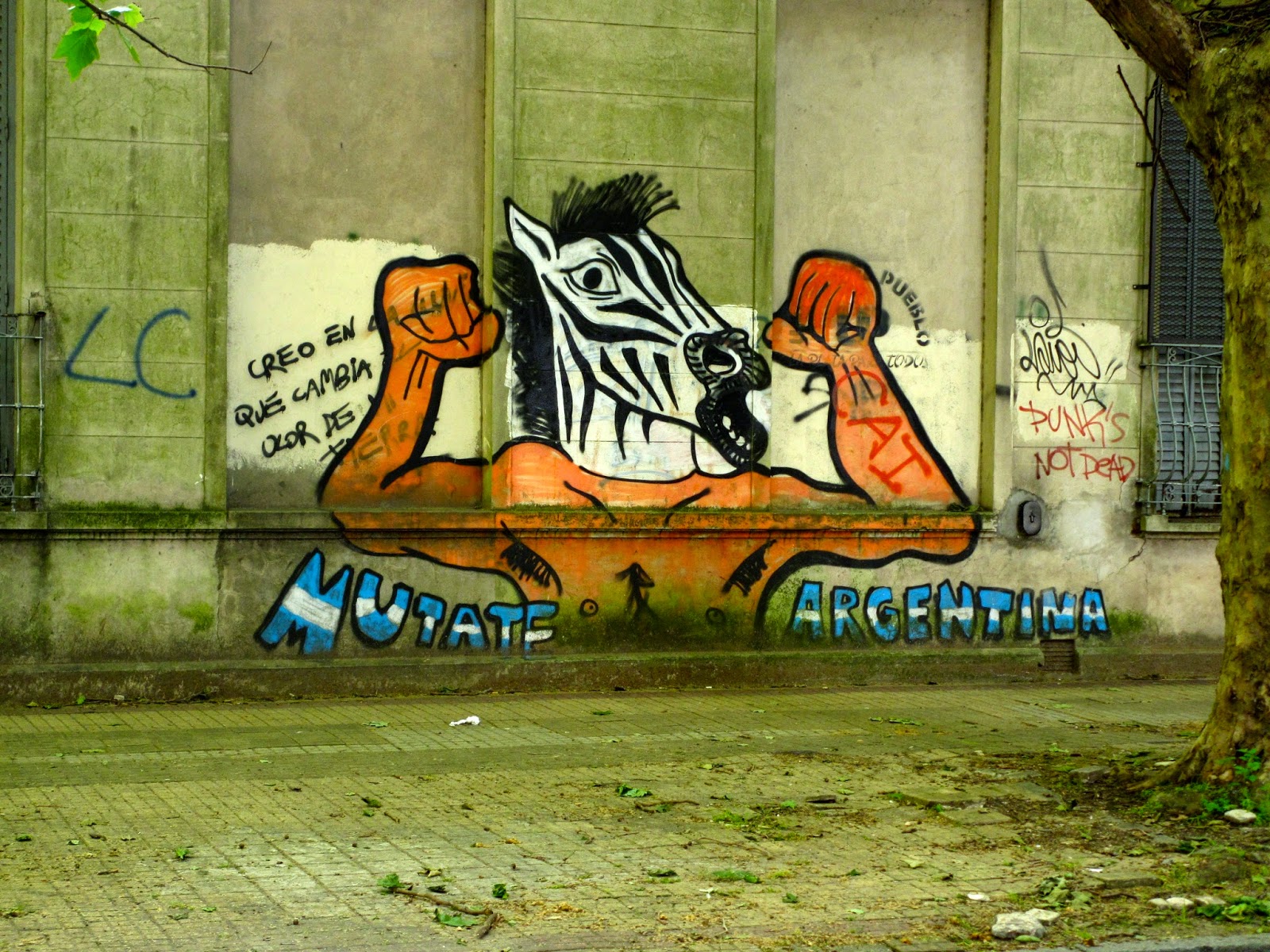
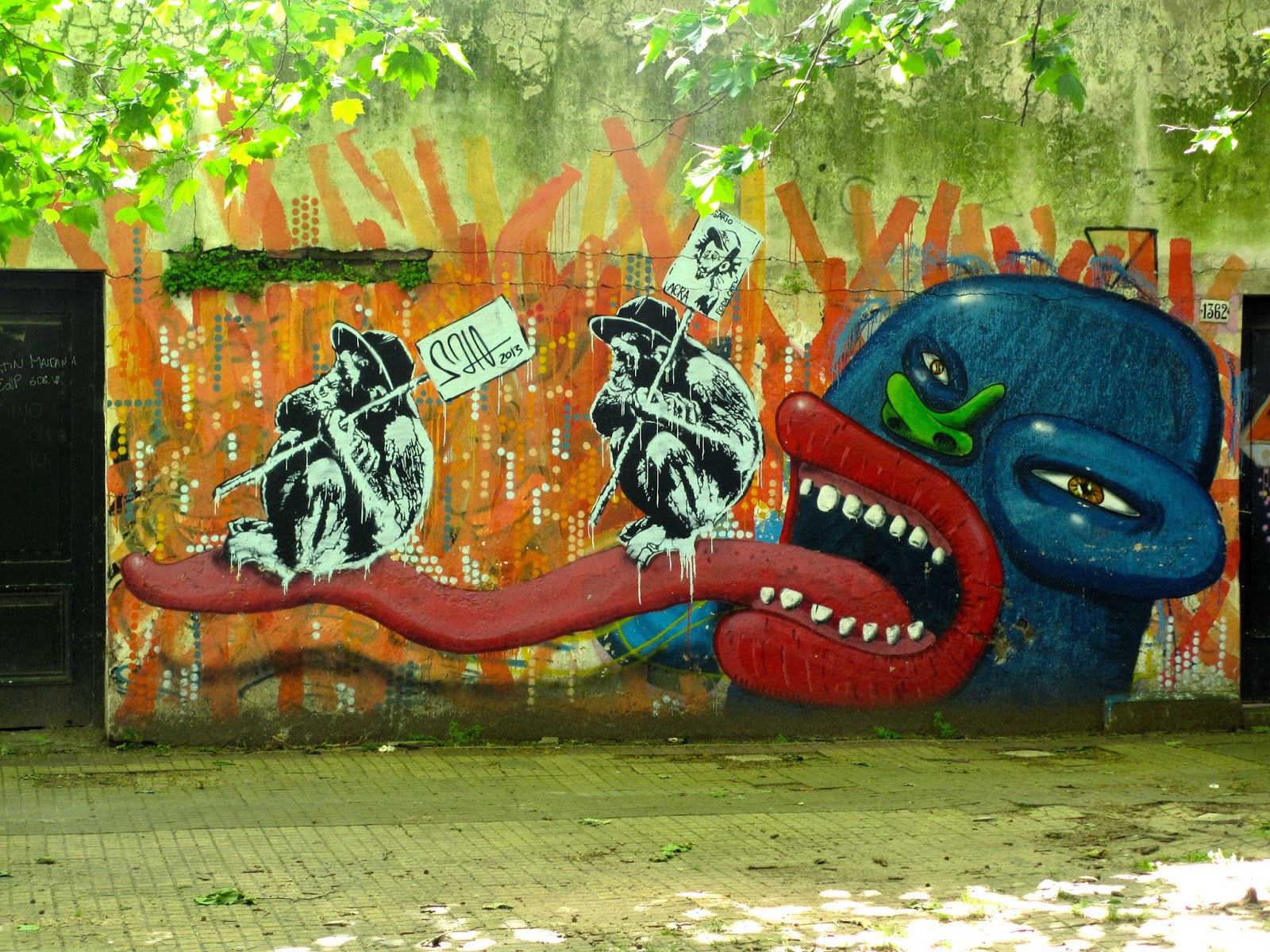
Murals are everywhere in La Plata. One of the colleges here has a mural art major. I don't understand the meaning behind most of them. I like to think that is because I am from another culture and not because I don't know a lot about interpreting art.

This mural honestly just makes me laugh a little. Also, the phrase "Mutate Argentina" is the same in English and Spanish. It's pronounced differently, but it means the same thing.

A lot of street art and graffiti has a social message. I think that is something I have grown to love about Argentina, and really a lot of Latin America. Graffiti is such a negative thing in the US. I like the idea of graffiti being used for social change. 

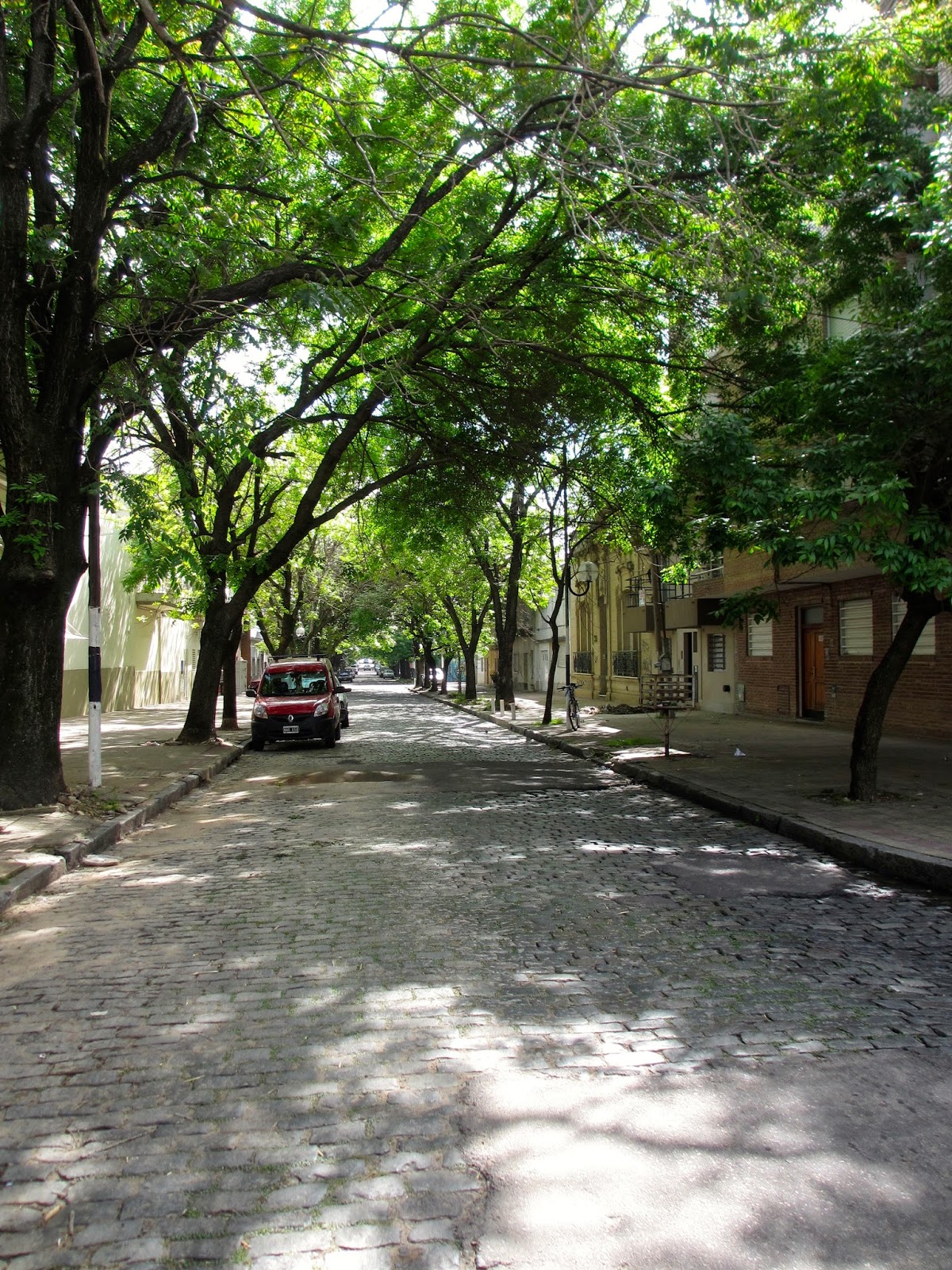
 Springtime:

This is a street that intersects with my diagonal. Again, it usually is busier, this was taken on a Sunday morning. The leaves are new and the weather is getting warmer. The cobblestone streets are pretty, but also difficult for my slightly clumsy feet to maneuver with grace.

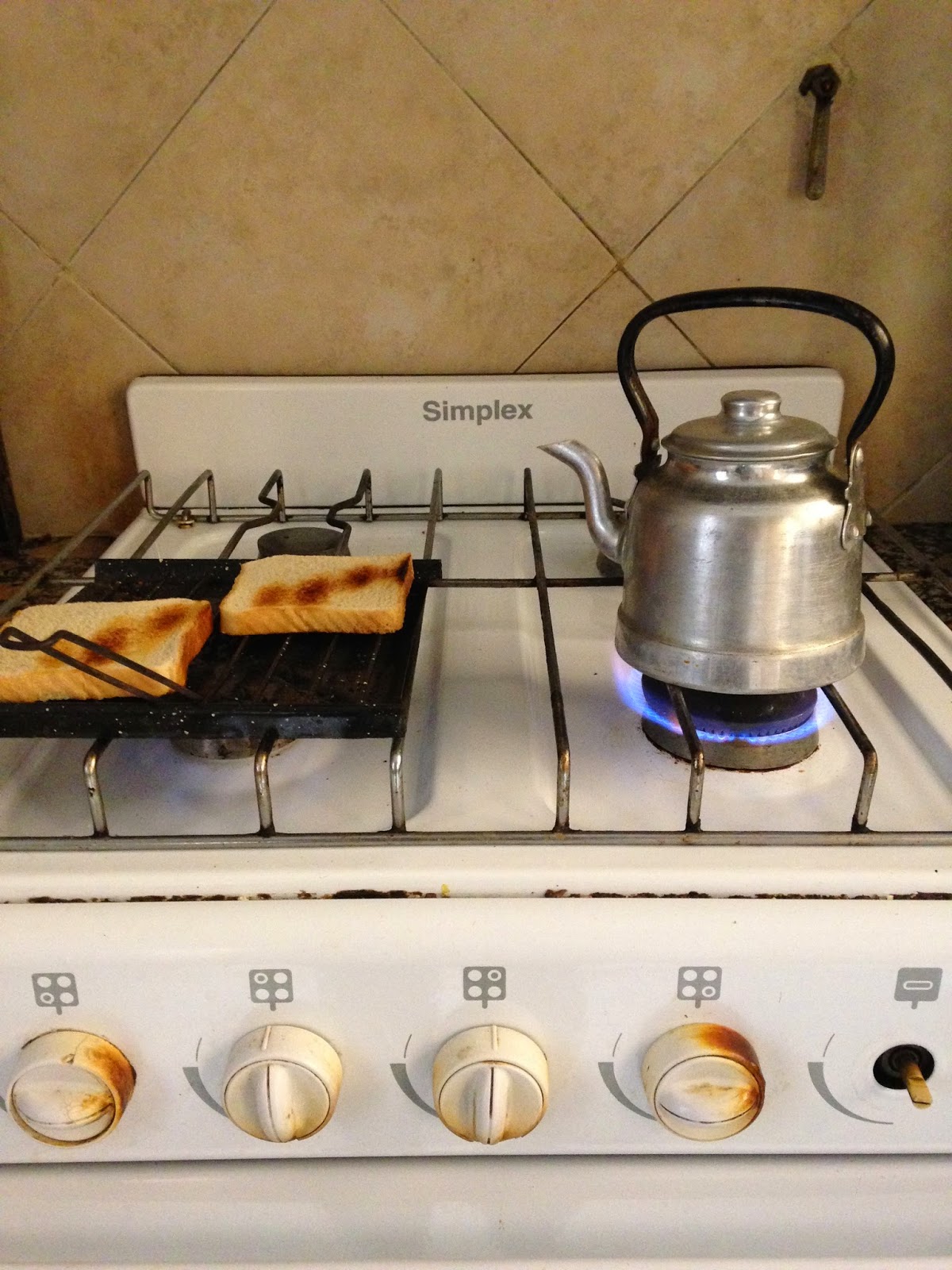
 The kitchen:

I have grown to think of this gas stove as beautiful because it means food is on its way to my belly. Pictured above is my breakfast: toast and water for coffee.

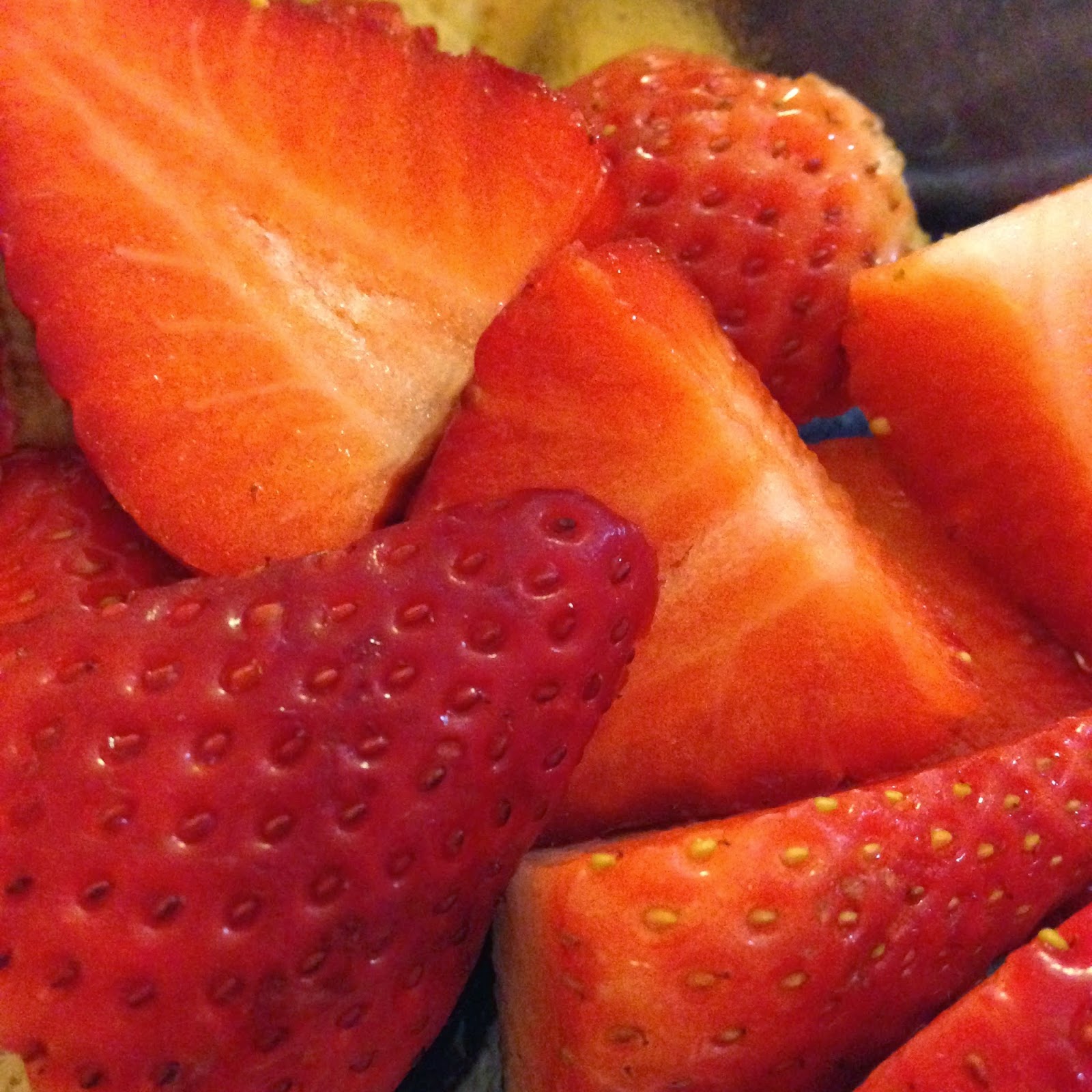
 Fresh fruit:

I get two strawberry seasons in one year! Life is good.


BONUS PHOTO FROM LAST NIGHT!


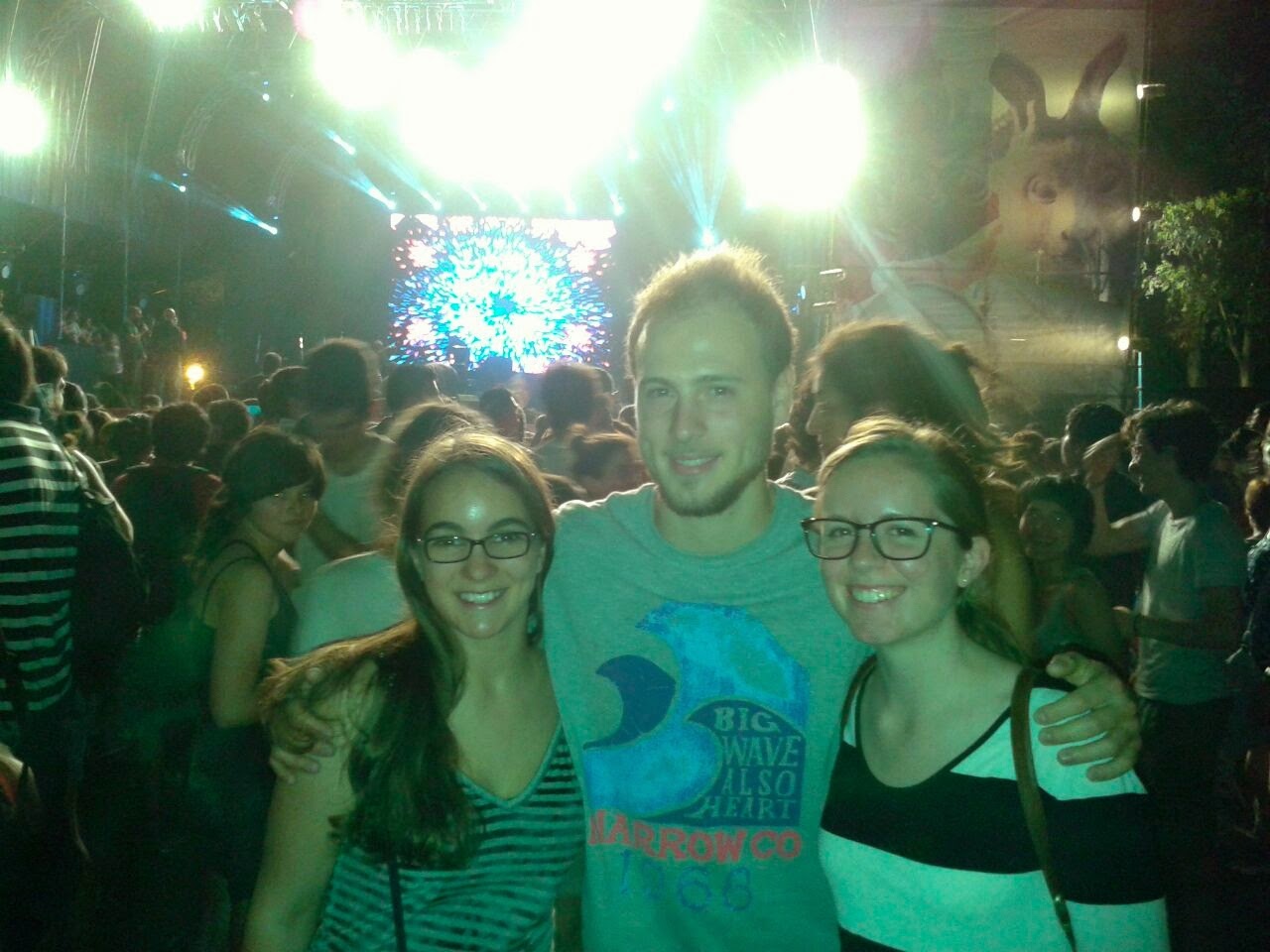
There was a free folklore festival last weekend. Chechu, Alexis and I went for the last band, Chaqueño Palavecino. 
*I am definitely not an expert.

Thursday, October 2, 2014

Palomas

Do you guys know how I hate birds? Well, I do. They are unpredictable, sometimes they fly at your head and they could poop on you at any moment. I'm currently living in a city, so naturally, there are pigeons everywhere. Today I found myself under a tree next to a pigeon, fully anticipating it flying into my face. But that didn't happen.

I actually haven't had any bad experiences with the pigeons here besides fearing their wings and their poop. So this post is actually going to be about linguistics. That's right. We're solving a linguistic mystery.

At orientation, Sally and I weren't sure what the word for pigeon was in Spanish. We decided to start calling them "las ratas del cielo" or "the rats of the sky" because they're gross and they are all over the place and the males just hop around with their feathers all puffed out, trying to jump on the females. It's just gross.

Fast forward to last week. In my church, there is a broken window way up high in the sanctuary. On Saturday, during Bible study, we kept hearing noises. Carlos went out to check on things and said it was just the palomas. I have always translated paloma as "dove" but I just checked Word Reference and it can be translated as pigeon when you are in the city. So, mystery solved, right? Wrong. Mystery just started.

I read on Word Reference that many other languages do not distinguish between dove and pigeon. So when speakers of these languages learn English, they have to learn the difference between dove and pigeon. They have to learn that pigeons are the rats of the sky and doves are beautiful, white symbols of peace. Can we talk about how symbols can be crazy different between cultures now?!

On Sunday during the sermon, Iván mentioned the part of Jesus' baptism where the Holy Spirit descends as a dove and blesses Jesus. Only he used the word, paloma, obviously, which I had just learned means pigeon. I looked up at the pigeons sitting on the broken window, and was reminded of the times God is okay with getting dirty. When God plants a garden. When God puts Abraham to sleep and walks between some bloody carcasses. When God becomes wind in a desert. When God comes into the world as a baby placed in a feeding trough. When God chooses to wash the feet of God's friends.

The linguistic mystery here can be solved by looking at etymology and finding that pigeon comes from French and dove comes from German. Since English just picks up words from all over, we get two totally different words for two very similar birds. I think the symbolic mystery here is a lot more profound, and a lot more beautiful. Given the prominence of liberation theology in Latin America, which says that God sides with those who suffer, it only makes sense that God would take the form of a humble pigeon.

So this week, I'm learning to embrace las ratas del cielo and remember that God is present in all things, both the doves and the pigeons.

Thursday, September 25, 2014

The Vulnerable Baker


Good news! I made cookies!

Remember how I was afraid of the oven? I learned how to light it and now I'm a pro. Well, probably not. But I have a working knowledge of our oven.

I have been thinking about making these cookies for a while now. But it has taken me some time to translate the ingredients, find them in the crowded supermarkets, and eventually put them all together and build up the courage to light the oven. Additionally, if I were in the states, I would use my hand mixer to at least cream the butter and sugar, if not mix the whole recipe together. I would preheat my oven using automatic temperature settings, and it would tell me when the oven was ready. Without these gadgets, I was feeling a little vulnerable. On top of that, measurements here are different. Obviously, they use the metric system. So when I converted the measurements for one stick of butter, I found out that a metric cup is different from an imperial cup. I figured the difference was small (and it is) but with baking, precision is important.


I made them anyway. Without a thermometer on our oven, I had to just wing it. I checked the cookies every few minutes and trusted my sense of smell to tell me if they were burning. I never expected a batch of cookies to be a lesson in presence. But I was so present with those cookies. None of them burned.

I've gained a lot of confidence from helping out with the cooking class for the kids at Compartiendo Un Sueño. We have made bread, cakes, cookie bars, and more! It has helped me feel more relaxed in the kitchen because I have a better idea of how Argentines cook: what ingredients they use, measuring spoons, mixers, techniques, etc. So that has been really helpful and really fun.

Cookies in the oven.

I've been acquiring the ingredients for some lemon cookies this week. So I'll try again soon.

Monday, September 15, 2014

Nuevacita

Today at the verduleria, the cashier asked me if I had any smaller bills. I had no idea what he was asking because the whole concept is kind of vague to me in English, so I definitely was not understanding his castellano. He made a joke about British pounds and then asked me where I'm from. I told him and he said, "Nuevacita?" Are you pretty new?

Yeah. It's been a month since I left home, three weeks since I left the States, and a little over two weeks since I left my traveling community. I still feel pretty nuevacita. But I would like to highlight a few little moments in the last couple weeks that have made me feel a little more at home.

I've done laundry twice. Almost half of my clothes smell different now! We have a washing machine so it's pretty easy. Once the clothes are washed, you have to put them in a little spinner thing that basically does a really intense spin cycle and gets most of the water out. Then it's straight to the clothesline! Thankfully we have had more sunny days than rainy days.

I have figured out my bus route to work! It is about 40 minutes once I get on the correct bus. But it is only one bus the whole way, so that's nice. Eventually I will probably read a book on the bus, but for now I'm okay with memorizing what is outside the windows.

I've been mistaken for an Argentine a few times already. Always before I speak and usually when I'm wearing my hip new glasses. The other day when I was walking home from the grocery store, a woman stopped me to ask for directions. As soon as I opened my mouth and said I did not know where the bus terminal was, she said, "Sos una turista!" and laughed a lot. I did not explain to her that I am a little more than a tourist and that's why I had this loaf of bread and backpack full of groceries. It was just nice to blend in.

A few of the older people from my church gave me a ride home from church last night. It was a little rainy and dark, so they told me to ride with them. It seems kind of insignificant, but it meant a lot to me. It's nice to be taken care of and I think I just missed riding in a car.

I'm getting the hang of using a gas stove. It was scary at first to light the burner, but I'm kind of a pro now. I haven't lit the oven yet. That one really scares me. But I bought ingredients for chocolate chip cookies, so I'm going to have to get over that fear soon. I'm learning about cooking with mostly all raw ingredients. It seemed daunting at first, but I've had small victories. I bought a butternut squash last week and made squash pancakes all week. They were delicious and I felt like a chef.

Obviously I've had less graceful moments, like eating all the chocolate I bought for the week in one night, and tripping over the cobblestone sidewalk literally every time I leave the house. But right now I feel like I'm going to be okay. Every day I learn a little bit more. Eventually I might even feel pretty comfortable.

Monday, September 8, 2014

Tadpoles

by Andrea Gibson

A tadpole doesn't know
it's gonna grow bigger.
It just swims,
and figures limbs
are for frogs.

People don't know
the power they hold.
They just sing hymns,
and figure saving
is for god.

Thursday, September 4, 2014

¡Acompáñame!

I spent some time with, Juli, one of my housemates today. We walked through a shopping area and then she showed me Plaza Moreno, which is the center of the city. There is a giant cathedral there and it is unbelievably detailed. So beautiful.

When we got back we were tired from all of the walking. She suggested that we drink some mate because that is just what you do here, so we sat down at the dining room table with our computers and started sipping away.

Juli offered me some of the little cookies she bought at the corner on our way home. I ate one because I want to try everything, but then I stopped because I didn't want to eat them all. Juli noticed and said, "Amanda, ¡acompáñame! ¡Coma!" So I did. I accompanied her while we ate cookies and drank mate.

This is what accompaniment looked like for me today. Juli accompanied me in figuring out where the heck I am in this little city and I accompanied her in eating cookies.

Monday, September 1, 2014

Bienvenida

I arrived in La Plata on Saturday! I am very excited to be here and to unpack my bags, literally and figuratively. My housemates had a party for my arrival, complete with pizza and music. I ducked out early to sleep, but they sounded like they had a pretty good time.

Sunday evening I went to my first culto, or worship service, at my church placement. They are small in numbers but great in welcoming hugs and smiles. They have received volunteers before, so they all kind of understand what I'm going through right now. Maybe even better than I do.

I've been kind of struggling with what it actually means for me to be here at all. The fact that I have a blue passport is kind of a big deal, in that it gives me the freedom to travel pretty much anywhere I want to go. Sometimes I feel like being here is just showing off these things that I have, simply by being born in a certain place, that people in most parts of the world do not.

And then I remember that I didn't just decide one day that I wanted to leave my friends and family for a year and move across the world. I was called here. And I believe that the God who called me here will make something good out of it. I have to.

Sometimes that still feels selfish and silly, and I think those times are when a welcome banner or a reminder from my housemates to eat dinner mean the most. Being welcomed by a community in some ways makes God a little more tangible.
Welcome Amanda

Wednesday, August 27, 2014

Ghost Adventures

I have had a lot of new experiences this last week, and I truly think most of them are more important than what I am about to share with you. But this also should be said.

The seminary we are staying at could be haunted.

ISEDET is an ecumenical seminary and it has a good history. I haven't learned anything very comprehensive, but I do know that most protestant pastors in Argentina have studied here. During the dictatorship in the late 70s to early 80s, the library was burned down. People probably got really upset about that. Someone could have even been hurt. I don't know. 

Pondering these things when walking down the dim hallways on a windy night is probably not good for your blood pressure.

Our very first night here, Maddie and Sally heard a piano playing very loudly around 11:30. No one is very sure where it was coming from.

Another night, I went into the women's bathroom, leaving the main door open and closing the stall door. While I was in there, the door quietly closed itself. OKAYYYY.

A few days later, we were all hanging out in the girls' room because that's where the best wifi is. The door was open, and then it closed. We all looked at each other. No one said anything. We went back to what we were doing.

Another day, I was walking to one of the classrooms by myself and the lights all turned off and then came back on. I thought the power went out, but when I asked, no one else had been affected.

Most of the time, when we leave the bathroom closest to our room, someone will hit the light switch and the lights will turn off, only to come back on moments later. 

I think I have figured out explanations for most of these things, so I'm not too freaked out. Most of the windows don't close all the way so it is very drafty. This tends to make doors open and close on their own. The wiring is old and doesn't always make sense. I figured out yesterday that there are two light switches next to each other in the bathroom and they both control the same light. So when you leave and flip them both, you turn the lights off, then back on. Many families live in apartments in the seminary. That means you might wake up in the middle of the night to loud piano music.

As you can see, my Nancy Drew skills are coming in handy here.